
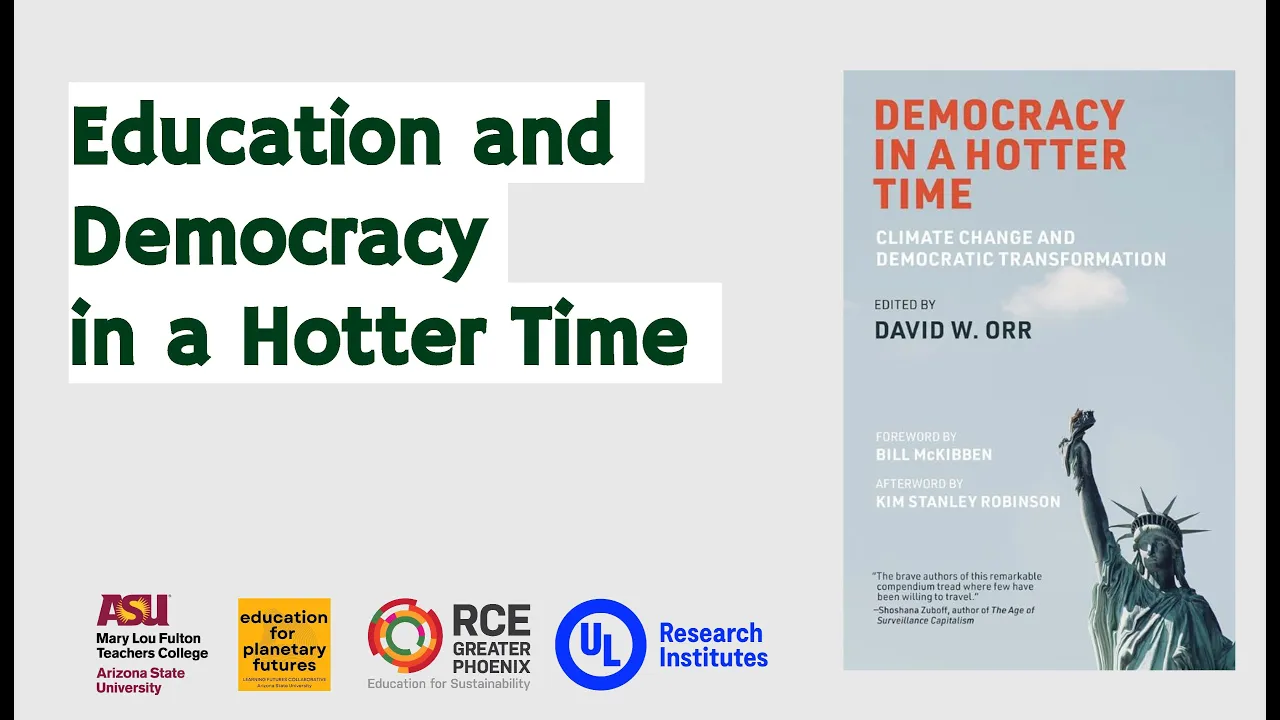
Join a conversation about Education and Democracy in a Hotter Time with author David Orr.
Explore how the escalating climate crisis is testing the very foundations of our democratic systems.
Join a conversation about Education and Democracy in a Hotter Time with author David Orr.
Explore how the escalating climate crisis is testing the very foundations of our democratic systems.
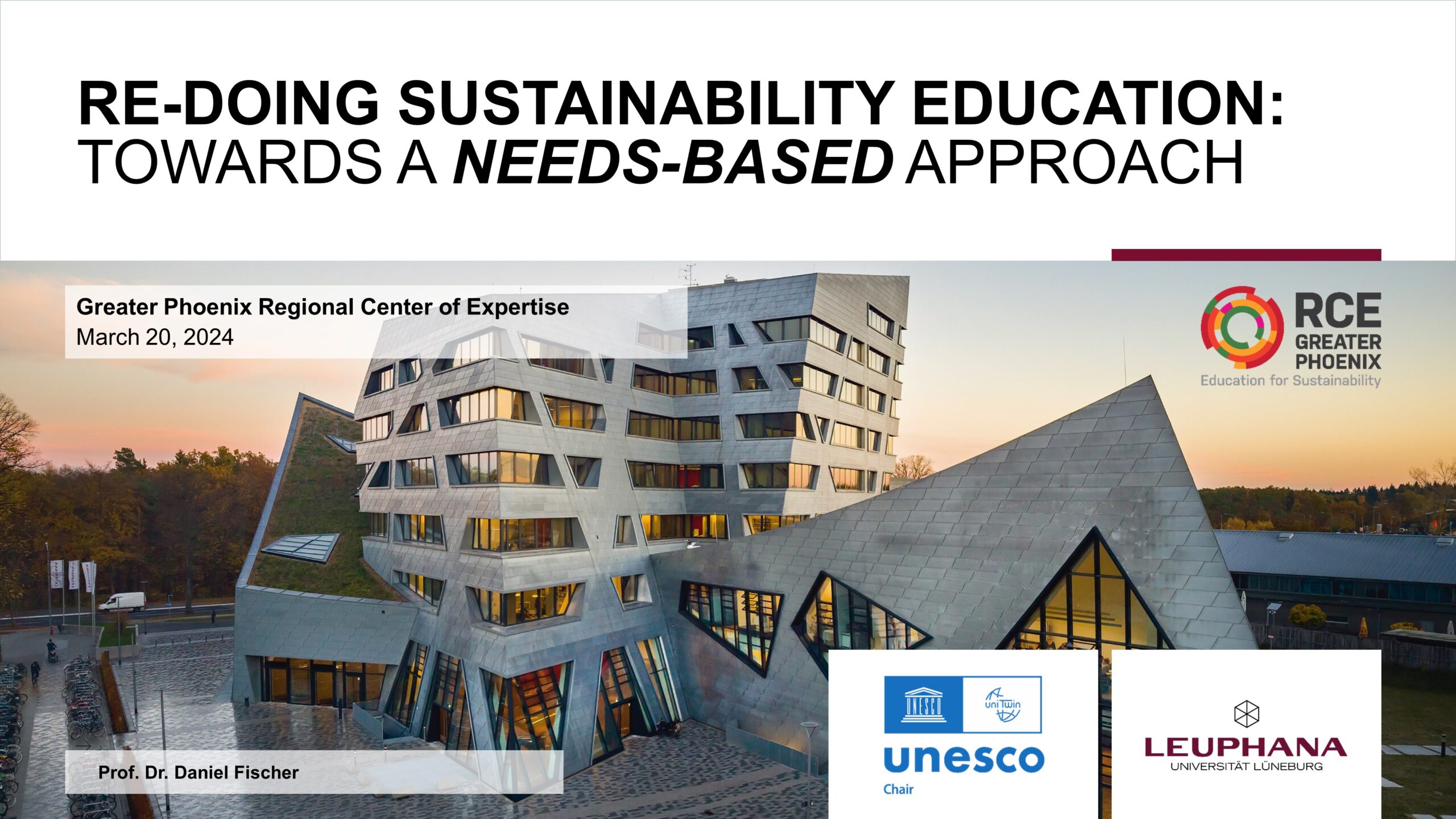
Re-Doing Sustainability Education: Towards A Needs-Based Approach – Daniel Fischer
In the face of multiple socio-ecological crises, sustainability education has received growing acceptance as an integral part of 21st-century education. Nevertheless, as sustainability education becomes more widely adopted, it has encountered criticism for evolving into a superficial checklist of curricular topics, adopting a problem-centric approach, and presenting politically and ideologically charged solutions in polarized debates. This presentation addresses these criticisms, offering an educational response and advocating for the re-essentialization of sustainability education to revitalize its purpose.

2024 Annual Meeting RCE Greater Phoenix
2024 Annual Meeting RCE Greater Phoenix
2024 Annual Meeting RCE Greater Phoenix
2024 Annual Meeting RCE Greater Phoenix
2024 Annual Meeting RCE Greater Phoenix
2024 Annual Meeting RCE Greater Phoenix
2024 Annual Meeting RCE Greater Phoenix
2024 Annual Meeting RCE Greater Phoenix
Education has never played as critical a role in determining humanity’s future as it does in the Anthropocene, an era marked by humankind’s unprecedented control over the natural environment. Drawing on a multisited ethnographic project among schools and activist groups in India and South Africa, Peter Sutoris explores education practices in the context of impoverished, marginal communities where environmental crises intersect with colonial and racist histories and unsustainable practices. He exposes the depoliticizing effects of schooling and examines cross-generational knowledge transfer within and beyond formal education. Finally, he calls for the bridging of schooling and environmental activism, to find answers to the global environmental crisis.
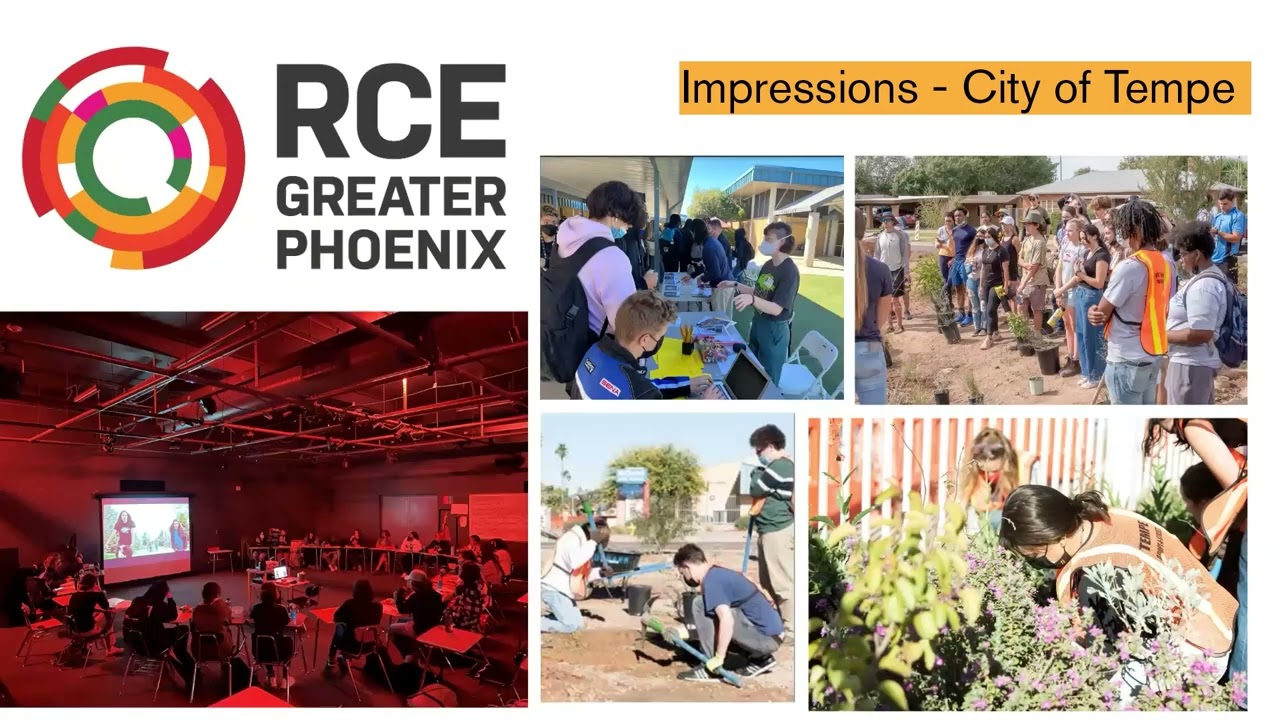
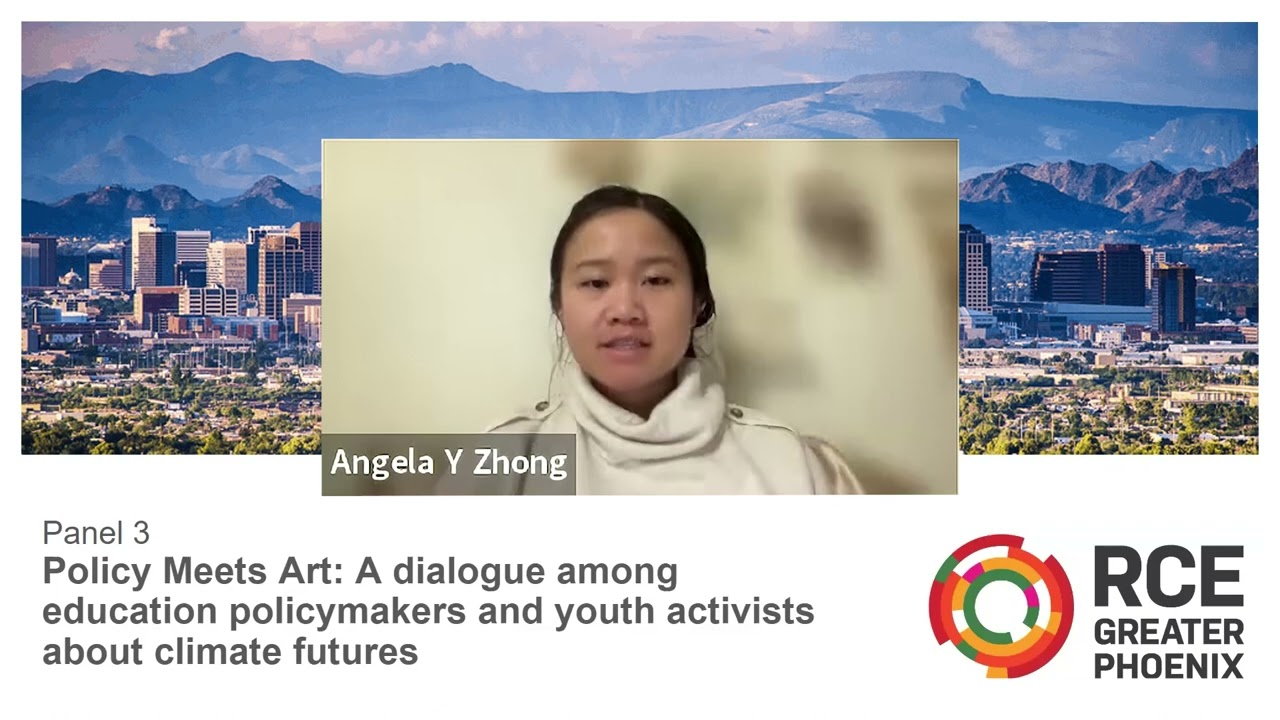
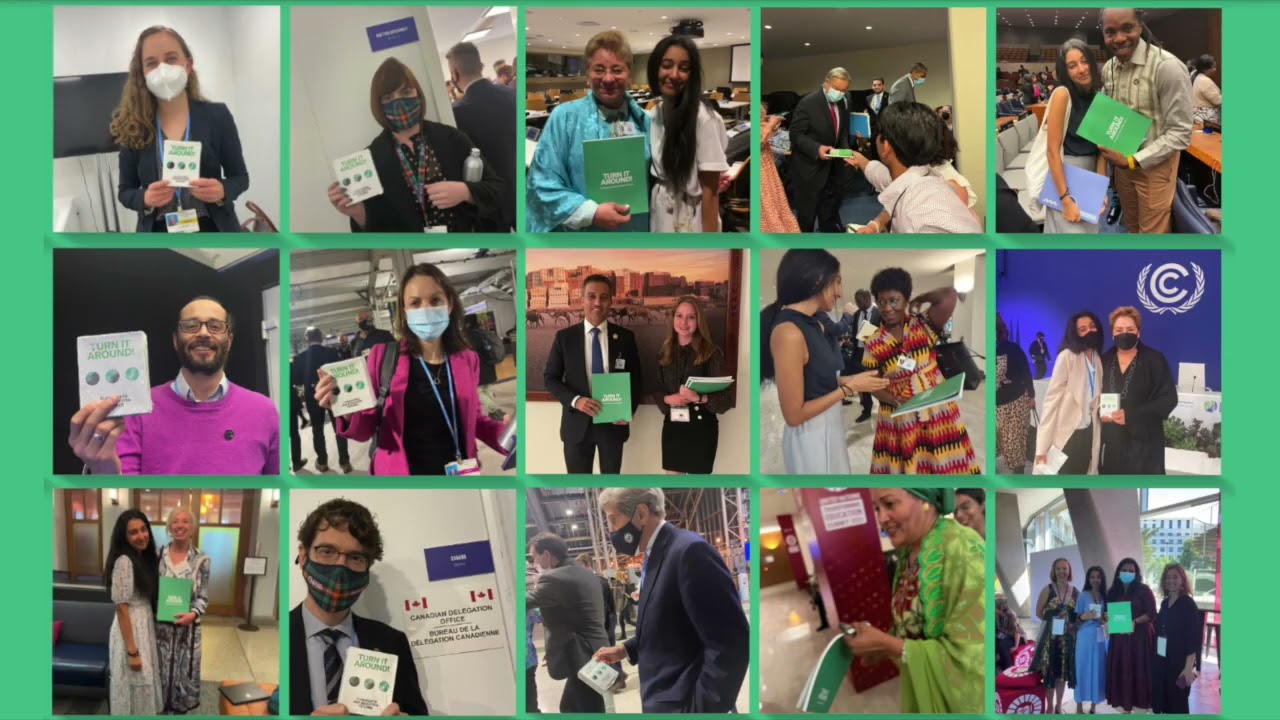
The online launch of RCE Greater Phoenix with messages from local and global partners.
The online launch of RCE Greater Phoenix with messages from local and global partners.
Education has never played as critical a role in determining humanity’s future as it does in the Anthropocene, an era marked by humankind’s unprecedented control over the natural environment. Drawing on a multisited ethnographic project among schools and activist groups in India and South Africa, Peter Sutoris explores education practices in the context of impoverished, marginal communities where environmental crises intersect with colonial and racist histories and unsustainable practices. He exposes the depoliticizing effects of schooling and examines cross-generational knowledge transfer within and beyond formal education. Finally, he calls for the bridging of schooling and environmental activism, to find answers to the global environmental crisis.
Exploring Instagram’s public pedagogy at scale, this book uses innovative Big Data methods to trace and analyze how publics reinforce and resist settler colonialism as they engage with the Trans Mountain pipeline controversy online. The book traces opposition to the Trans Mountain pipeline in so-called Canada, where overlapping networks of concerned citizens, Indigenous land protectors, and environmental activists have used Instagram to document pipeline construction, policing, and land degradation; teach using infographics; and express solidarity through artwork and re-shared posts. These expressions constitute a form of “public pedagogy,” where social media takes on an educative force, influencing publics whether or not they set foot in the classroom.
A discussion with Alysha Farrell, Candy Skyhar, & Michelle Lam. This new critical volume presents various perspectives on teaching and teacher education in the face of the global climate crisis, environmental degradation, and social injustice. Teaching in the Anthropocene calls for a reorientation of the aims of teaching so that we might imagine multiple futures in which children, youths, and families can thrive amid a myriad of challenges related to the earth’s decreasing habitability.
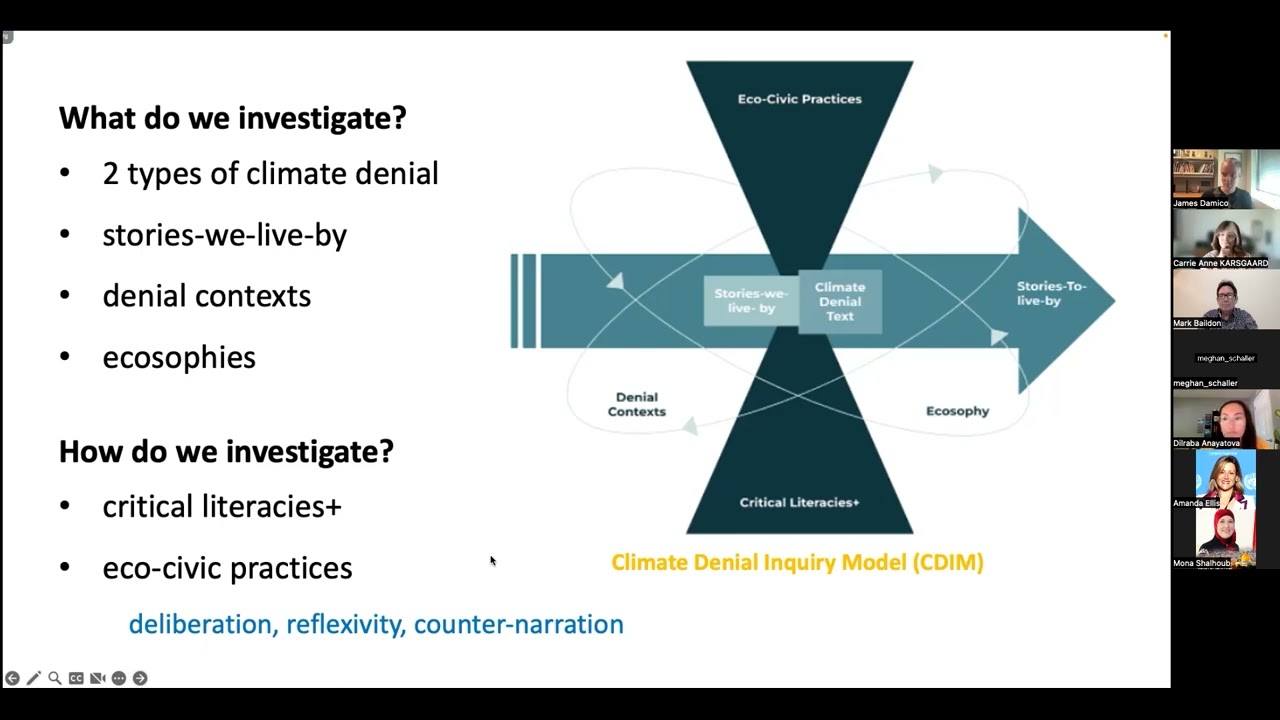
A discussion with James Damico & Mark Baildon. Climate change and climate denial have remained largely off the radar in literacy and social studies education. This book addresses that gap with the design of the Climate Denial Inquiry Model (CDIM) and clear examples of how educators and students can confront two forms of climate denial: science denial and action denial. The CDIM highlights how critical literacies specifically designed for climate denial texts can be used alongside eco-civic practices of deliberation, reflexivity, and counter-narration to help students discern corporate, financial, and politically motivated roots of climate denial and to better understand efforts to misinform the American public, sow doubt and distrust of basic scientific knowledge, and erode support for evidence-based policymaking and collective civic action. With an emphasis on inquiry-based teaching and learning, the book also charts a path from destructive stories-we-live-by that are steeped in climate denial (humans are separate from nature, the primary goal of society is economic growth without limits, nature is a resource to be used and exploited) to ecojustice stories-To-live by that invite teachers and students to consider more just and sustainable futures.

